In early 2026, the question isn't "Which phone should I buy?" but rather "Do I even need one?" While the Samsung Galaxy S25 Ultra and iPhone 17 are still technical marvels, the real energy in Silicon Valley has shifted. Tech leaders envision a post-smartphone future where AI agents handle our digital lives through "invisible" interfaces like smart rings and AR glasses, reducing our reliance on physical screens.
Why 2026 is the "Year of Truth" for AI Gear
Last year was about hype; this year is about utility. We’ve moved past the "beta-test" feel of early devices like the original Rabbit R1. Today’s AI wearables, like the Acer FreeSense Ring and the latest Ray-Ban Meta Glasses, aren't just accessories—they are becoming the primary way we interact with the world.
During my week-long experiment, I swapped my Pro Max for a titanium smart ring and a pair of AI-integrated spectacles. Here’s what I learned about the "Present Wellbeing" trend that's taking over the US market.
The Rise of "Invisible Computing"
From Scrolling to Intent
We used to spend hours scrolling. Now, we use agentic workflows. Instead of opening an app, clicking a menu, and ordering a latte, I simply told my glasses, "Get my usual from the shop on 5th." The AI agent handled the payment and estimated the walk-time without me ever seeing a UI.
This is what experts call "Expressing Intent." The device is no longer a destination; it’s a conduit.
The "Smartphone Pinky" is Healing
We've all felt it—that slight dent in your pinky finger from holding a heavy glass slab. In 2026, "Present Wellbeing" is a massive consumer driver. People are tired of the "head-down" lifestyle. Wearables allow for a "heads-up" existence. I found myself looking at the architecture of the city and making eye contact with baristas again.
The Best AI Wearables of 2026: My Top Picks
If you’re looking to dip your toes into the post-mobile world, these are the current heavy hitters:
Device CategoryTop Pick (2026)Best For...Smart RingAcer FreeSense RingMinimalist health & gesture controlAI GlassesRay-Ban Meta (Gen 3)Hands-free capture & visual searchHearablesAirPods Pro 3Ambient AI translation & "Voice-first" navigationAR WearableApple Vision AirLightweight "spatial" productivity
Pro Tip: Don't try to replace your phone overnight. Start by moving your "quick tasks" (texts, reminders, music) to a wearable to see how much screen time you actually save.
Are Smartphones Actually Becoming Obsolete?
Not quite yet, but they are changing roles. In 2026, your phone is becoming a "hub" or a "brain" that stays in your bag or pocket, providing the processing power for your glasses and rings.
However, several features are officially dead:
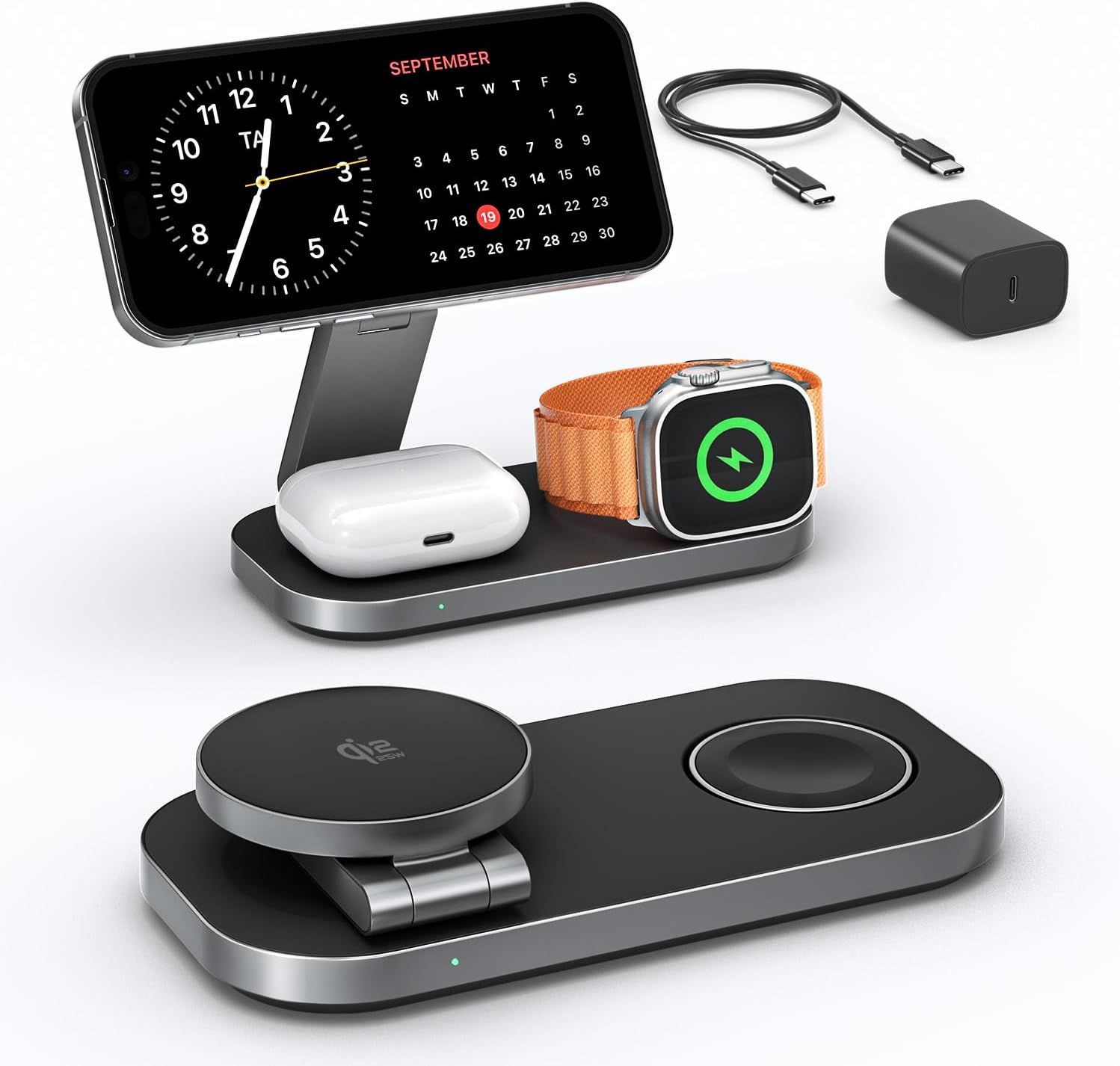
- Physical Ports: Qi2 wireless charging has made the USB-C port a relic of the past.
- SIM Cards: We are 100% iSIM/eSIM now.
- Expandable Storage: With 2TB internal speeds being the standard, the MicroSD slot is a ghost of tech history.
FAQ: What People Also Ask
When will smartphones be completely replaced?
Most analysts suggest a "hybrid" era until 2030. While phones won't disappear, they will no longer be the primary interface for 80% of our daily tasks.
Are AI wearables safe for privacy?
2026 has seen a massive push for On-Device Processing. Most modern AI rings and glasses process your voice and data locally, meaning your "conversations" don't always have to hit the cloud.
Can a smart ring really replace a screen?
For notifications and biometrics, yes. For watching Netflix? No. The future is about Specialized Devices rather than one-size-fits-all hardware.